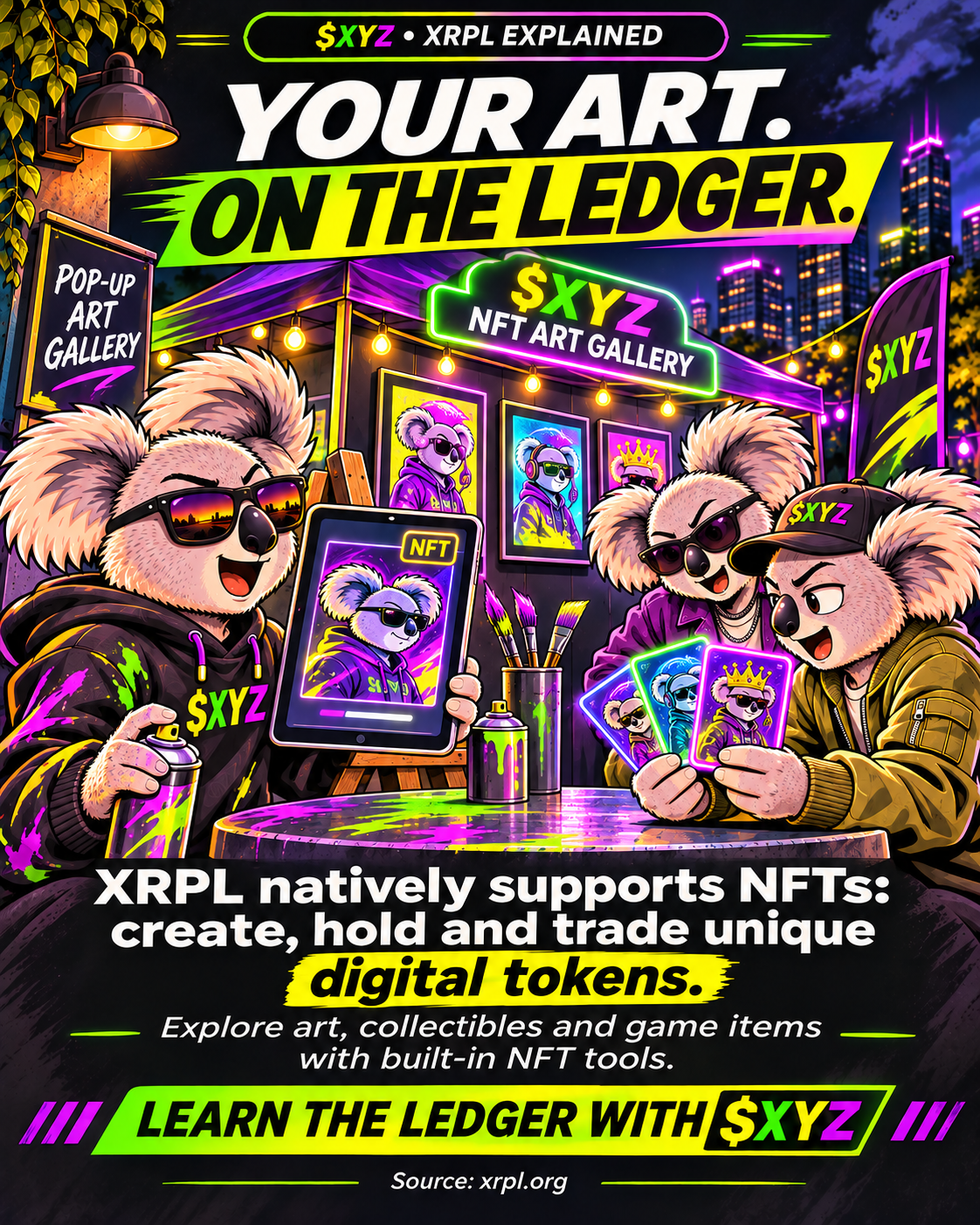
Your art - On the Ledger
XRPL natively supports NFTs: create, hold and trade unique digital tokens. Explore art, collectibles and game items with built-in NFT tools.
Kev paints a portrait for his pop-up gallery and wants to release three digital editions. He can use the same image for all three and mint a separate non-fungible token (NFT) for each edition. Each token has its own ID, so collectors can tell them apart and see which account holds each one.
What actually goes on the ledger?
When Kev mints an NFT, the XRP Ledger records the token and its unique ID. The token can also include a URI, a short reference that typically points to metadata such as the artwork’s name, description and image link. The image file usually lives outside the ledger, on a website or a system such as IPFS. If the file becomes unavailable, the token can still exist while the artwork stops loading.
How does a collector buy one?
XRPL has built-in transactions for minting NFTs and creating buy or sell offers. If Kev lists a transferable edition for sale, a collector can accept the offer. When that sale is validated and succeeds, the ledger records the change in ownership. The same tools can be used for collectibles or game items. The game still decides what the item does when a player holds it.
What does the buyer get?
The buyer becomes the on-ledger holder of that particular token. Any permission to reproduce the artwork or use it commercially depends on the creator’s licence or sale terms. Kev can make those terms clear up front so collectors know what comes with the edition.
Kev’s tip: Before buying, check the issuer and the NFT ID, open the artwork link and read the creator’s terms.
Sources
#XRPLEducationMonth