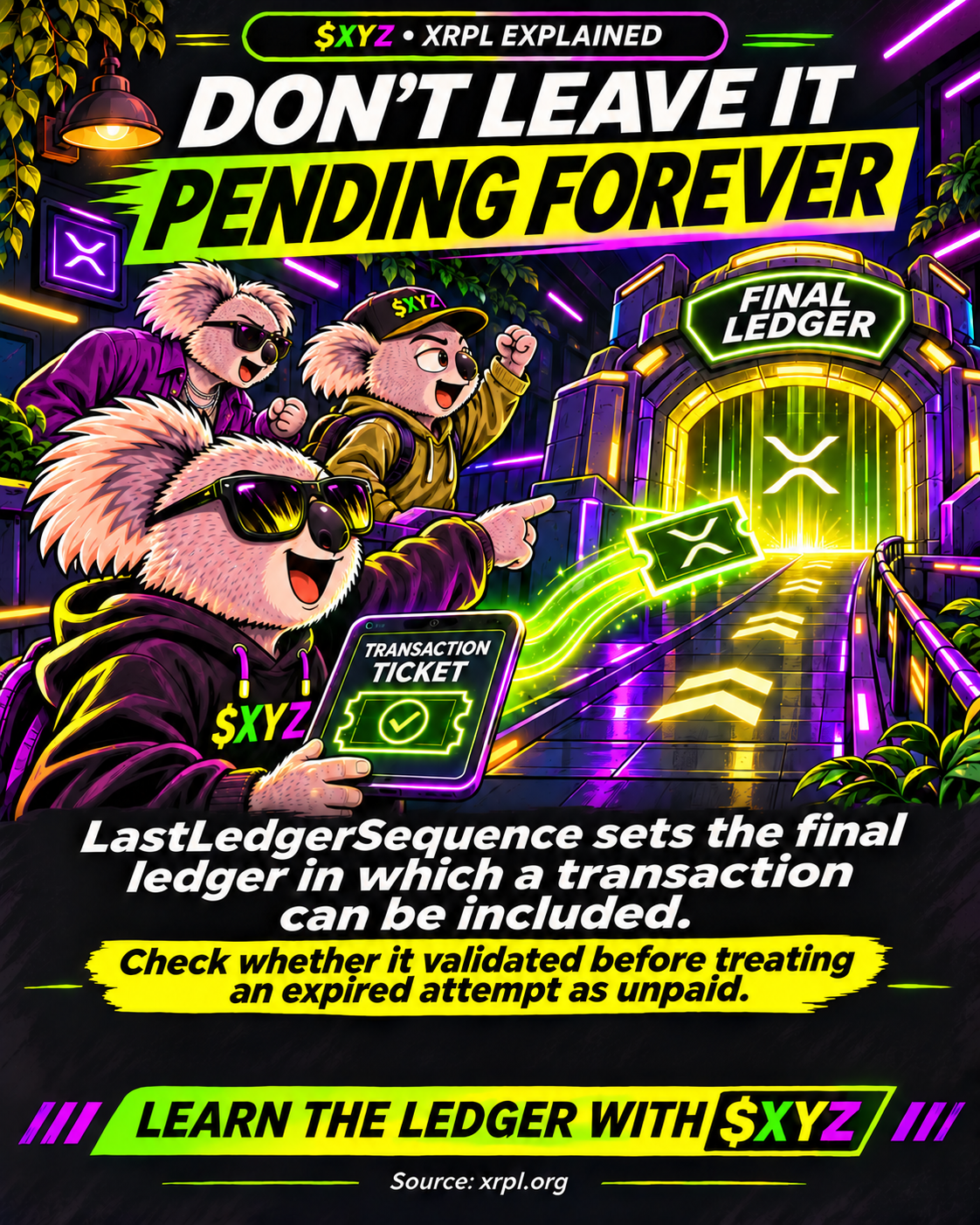
Don’t leave it pending forever
LastLedgerSequence sets the final ledger in which a transaction can be included. Check whether it validated before treating an expired attempt as unpaid.
Kev sends 25 XRP to a designer helping with a $XYZ community project. His connection drops before the wallet shows a final result.
Has the payment gone through, or is it still waiting? Sending another payment immediately could mean paying twice.
LastLedgerSequence helps put a deadline on the original attempt. Checking its final result tells Kev what actually happened.
What does LastLedgerSequence do?
It specifies the last ledger number in which a transaction can be included. The wallet or app sets this field before signing.
For a simple example, imagine the latest validated ledger is number 1,000 and the transaction’s LastLedgerSequence is 1,005. It can be included up to and including ledger 1,005, but never in ledger 1,006 or later.
This is a deadline measured in ledger numbers, rather than a clock time. It limits how long the transaction remains eligible; it does not guarantee success.
Does reaching the deadline mean Kev has not paid?
No. The payment may already have succeeded before the deadline. Kev’s wallet could simply have missed the confirmation.
The deadline does not reverse a payment that has already validated. Equally, an initial submission response is not the same as a final result: a transaction that appears successful at first can still fail.
Kev needs to check both whether the transaction is validated and whether its recorded result is successful. A validated transaction can also record a failure, so “validated” alone does not mean the designer received the XRP.
What should Kev check before trying again?
Kev uses the original transaction hash to look up its outcome.
If it succeeded in a validated ledger, the payment is complete. If a validated ledger has passed the deadline and the transaction was never included, that attempt can no longer go through.
However, one “transaction not found” response is not enough when the server has gaps in its history. The app needs reliable records covering the full relevant ledger range.
Only after establishing the original outcome should Kev decide whether another payment is needed.
Kev’s tip: Keep the transaction hash. A deadline stops a delayed attempt from lingering, but checking the result helps prevent paying twice.
Sources
#XRPLEducationMonth