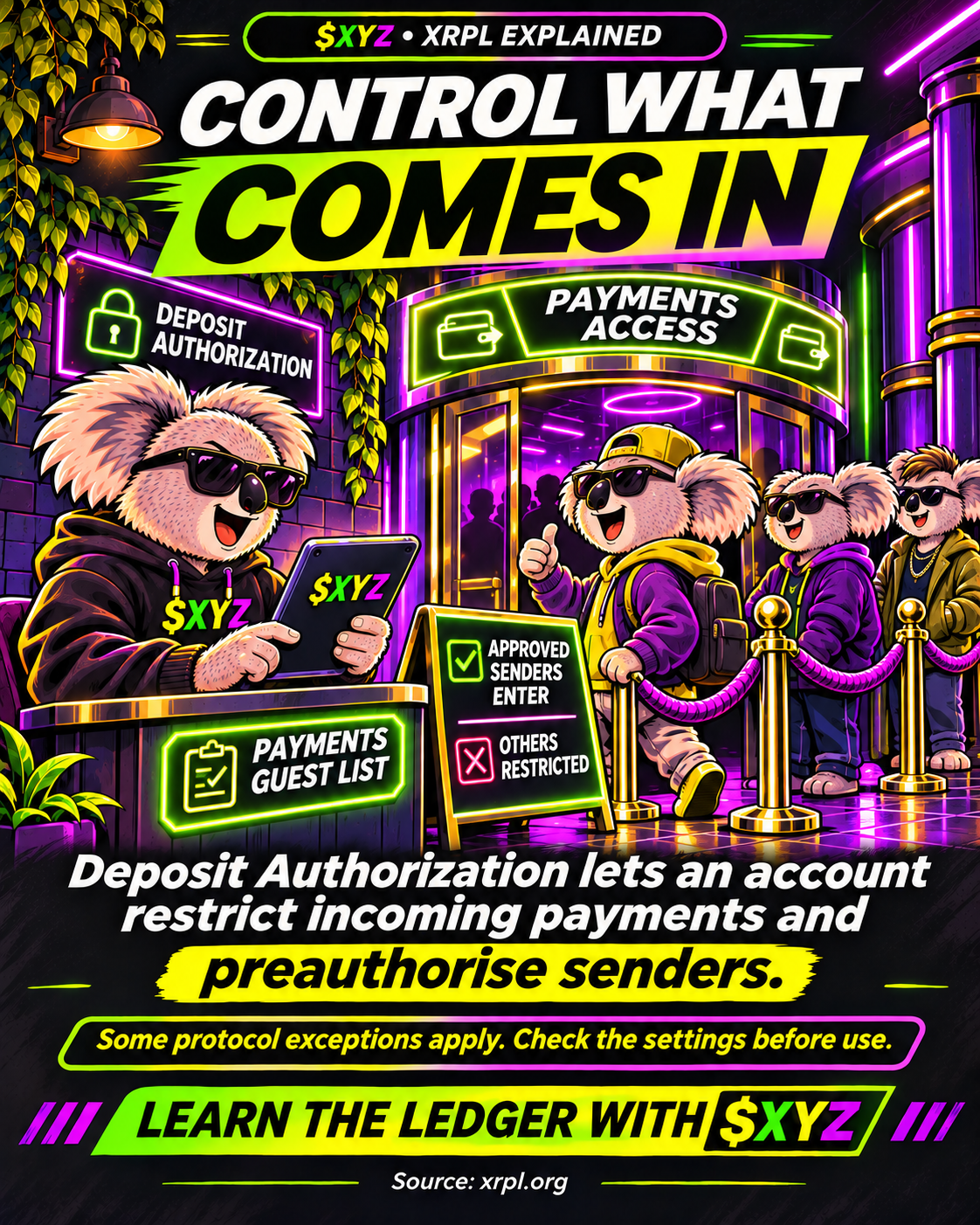
Control what comes in
Deposit Authorization lets an account restrict incoming payments and preauthorise senders. Some protocol exceptions apply. Check the settings before use.
Kev and his mates manage a community treasury. They want incoming payments to come from approved project accounts, so they can keep track of where the funds originate.
XRPL’s Deposit Authorization setting gives them more control over incoming funds. Think of it as a payments guest list, with specific rules about who can get through.
What does Deposit Authorization change?
New XRPL accounts have this setting switched off. Enabling it restricts incoming payments, including XRP and tokens, subject to the protocol’s exceptions.
For Kev’s treasury, that means an ordinary payment from an unapproved sender will generally fail. It does not sit in an inbox waiting for Kev to accept it.
The setting controls deposits into the account. Approving someone to send funds does not give them permission to spend the treasury’s money.
How does Kev approve a sender?
Kev’s team can use a DepositPreauth transaction to preauthorise a specific sending address. That address can then send payments without the team approving each one separately, provided the other payment requirements are met.
The team can prepare these approvals before enabling Deposit Authorization, helping avoid disruption to expected payments.
If a project changes wallets, Kev can revoke the old address’s approval and authorise the new one. He needs the actual address sending the transaction, which may differ from the address a service gives customers for deposits.
Each account preauthorisation creates a ledger entry that counts towards the authorising account’s owner reserve. Removing it removes that entry. Creating or revoking an approval also requires a transaction fee.
Does it block every other incoming transfer?
No. If an account’s XRP balance is at or below the base reserve, it can still receive an XRP payment no larger than that base reserve. This helps prevent the account becoming unable to fund transactions.
An account can also receive funds through actions it authorises itself, such as cashing an XRPL Check or finishing an escrow. Trading offers and trust-line rippling can allow other balance changes.
These exceptions make the surrounding account settings important.
Kev’s tip: Confirm each sender’s actual address, prepare approvals before switching the restriction on, and test the setup on Testnet before using it for your treasury.
Sources
#XRPLEducationMonth