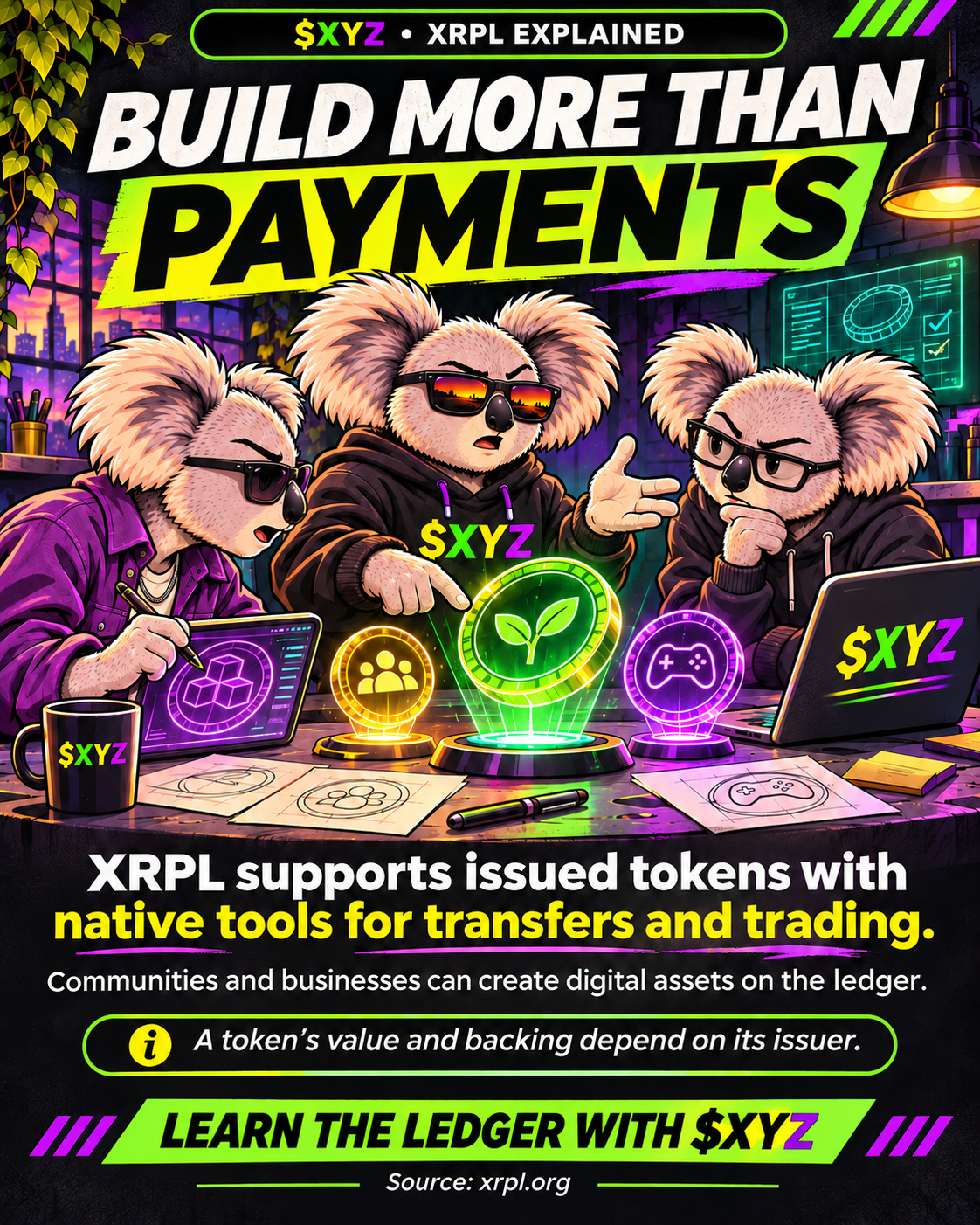
Build more than payments
XRPL supports issued tokens with native tools for transfers and trading. Communities and businesses can create digital assets on the ledger.
Kev’s local café wants to give regulars loyalty points. His mate is building a game and wants players to earn credits. A community project wants a token of its own. All three can issue tokens on the XRP Ledger and use its built-in tools to record balances and transfer them.
What is an issued token?
An issued token is a digital asset created by an XRP Ledger account. XRP is the ledger’s native asset and has no issuer. A trust line token, one type of issued token, is identified by both its currency code and issuer address. Two cafés could both use the code POINTS and the ledger would still treat them as separate assets.
For a trust line token, a user generally sets up a trust line to the issuer before receiving it. This tells the ledger which token the account is willing to hold and sets a limit on how much it can receive through payments.
What does the ledger handle?
The XRP Ledger keeps track of balances and processes transfers. Eligible tokens can also trade on its built-in decentralised exchange when there are matching offers or liquidity in a pool. Builders can use those features while their own app handles the rules of the programme. The café decides how customers earn points and what they can redeem them for. The game decides what its credits unlock.
What gives a token value?
That depends on what people can do with it and what others are willing to pay for it. If an issuer says a token can be redeemed for dollars, products or services, the promise depends on the issuer’s ability to honour it. The ledger can show who holds the token and how it moves. Proof of any claimed backing has to come from elsewhere.
Kev’s tip: Check the issuer address as well as the ticker. If the token promises something in return, check who will honour it and how redemption works.
Sources
- XRPL.org — Tokens
- XRPL.org — Issue a Fungible Token
- XRPL.org — Trust Line Tokens
- XRPL.org — Automated Market Makers
#XRPLEducationMonth