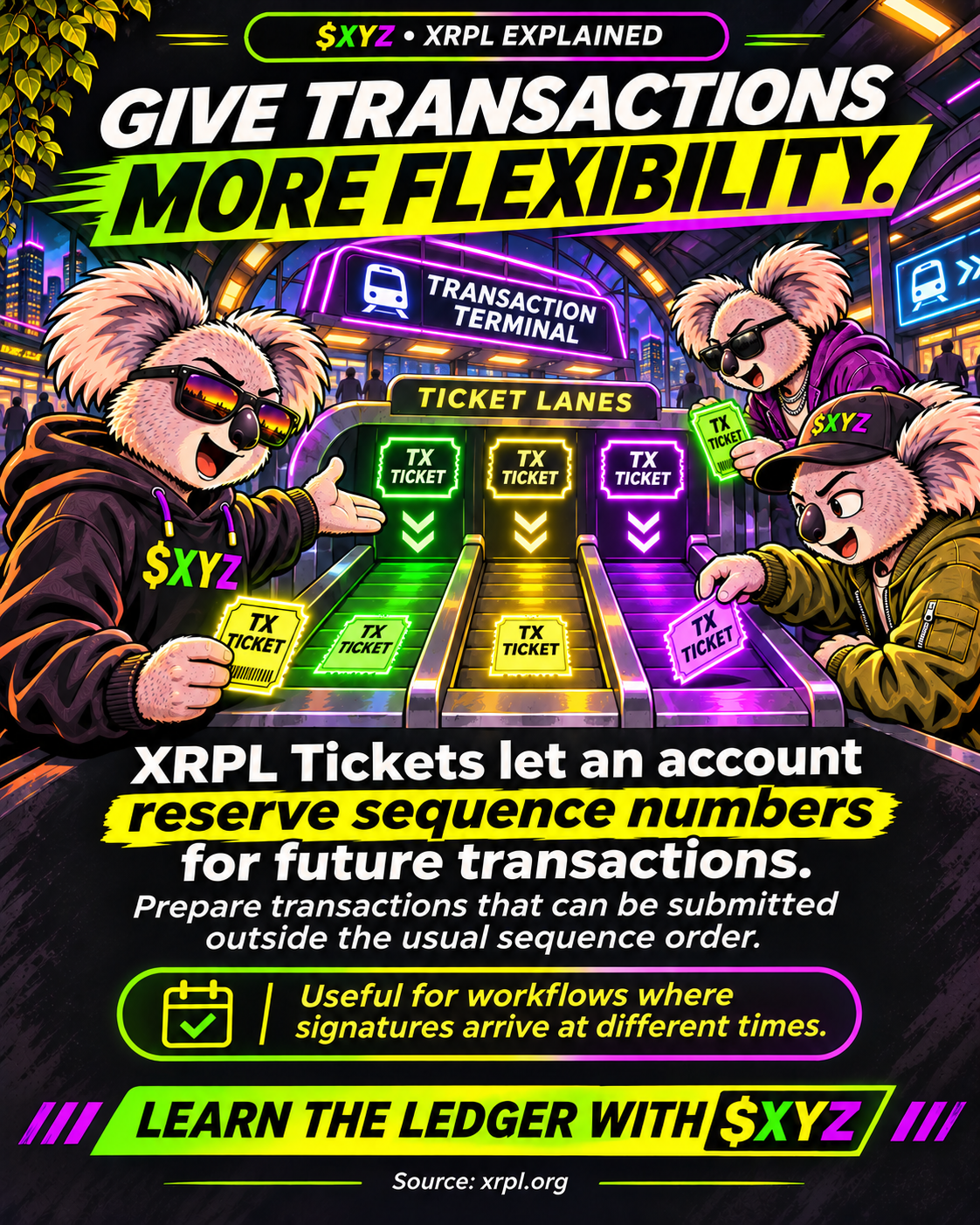
Give transactions more flexibility
XRPL Tickets let an account reserve sequence numbers for future transactions. Prepare transactions that can be submitted outside the usual sequence order.
Kev’s team has two payments to make from its treasury. The venue deposit is still waiting for a second signature, but the printing bill already has both approvals. With Tickets, the team can submit the printing payment while the venue deposit is still being signed.
Why does transaction order matter?
An XRP Ledger account normally has a sequence number that tells the network which transaction it expects next. If the team prepares the venue deposit with that number and the printing payment with the following number, the printing payment has to wait for the earlier number to be used. Changing the sequence number on a signed payment means collecting its signatures again.
What does a Ticket change?
The account can use TicketCreate to set aside sequence numbers for future transactions. The team assigns a different Ticket to each payment before collecting signatures. If the printing bill is ready first, the team can submit it with its own Ticket and keep the venue payment’s Ticket for later. Each payment still needs the signatures required by the treasury’s signer list.
What should the team plan for?
Each Ticket is single-use and counts towards the account’s XRP reserve while it’s unused. A Ticket can be consumed even if the transaction fails, when the failure is recorded in a validated ledger with a tec result. If two transactions genuinely depend on each other, the team should wait for the first to validate before submitting the second. Tickets give the team flexibility over when it submits transactions. The team still needs to manage any dependencies.
Kev’s tip: Give independently approved payments their own Tickets, then check each transaction’s final result in a ledger explorer.
Sources
#XRPLEducationMonth